U.S. Retaliation In Iran Edges Toward Civilian Systems
U.S. Retaliation In Iran Edges Toward Civilian Systems
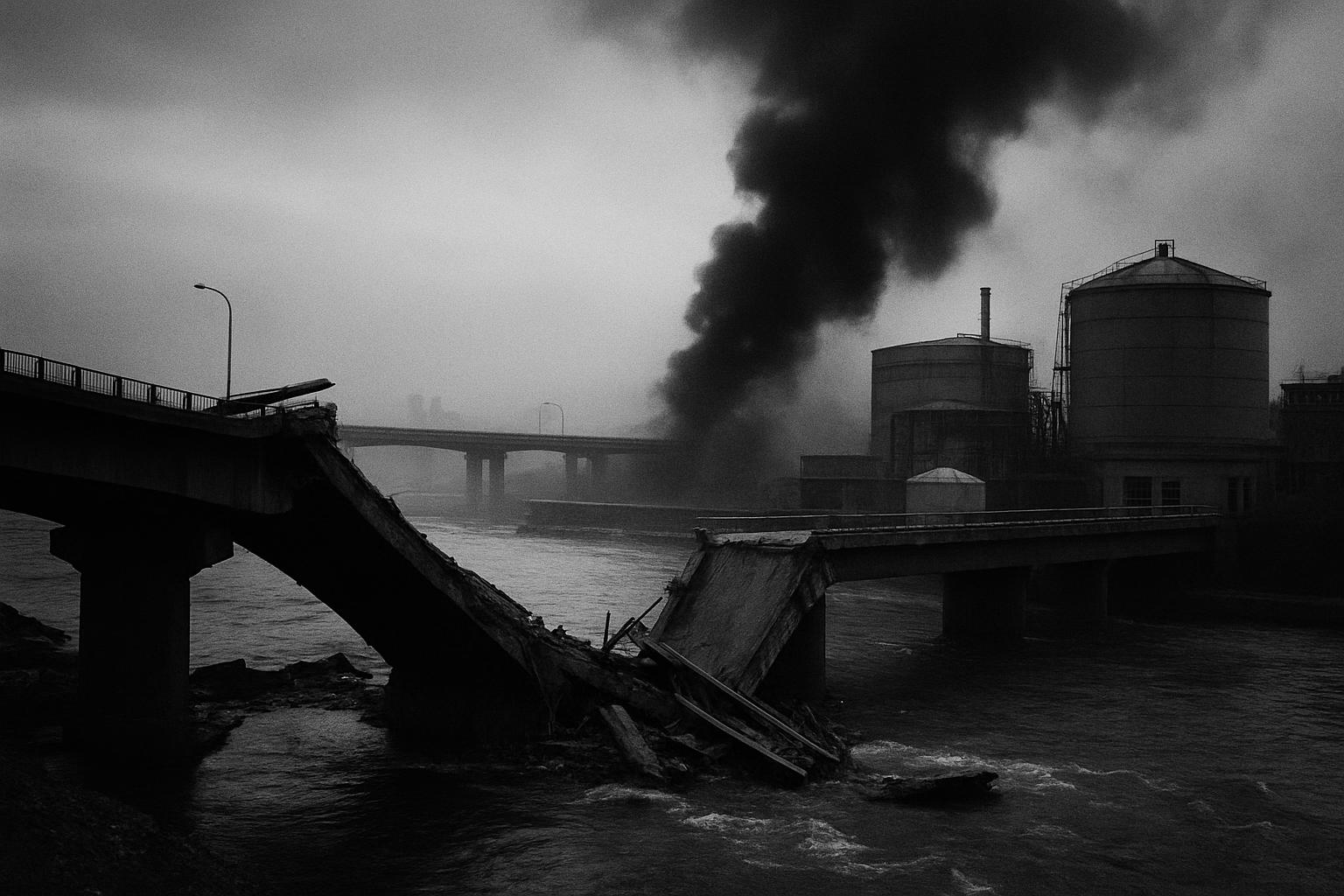
Images of damaged bridges and a water plant in Iran after reported U.S. attacks signal a move into dual-use space, where strikes can ripple into civilian life, stiffen politics in Tehran and Washington, and shrink the room for a controlled climbdown.
 Adrian ValeWorld Correspondent
The latest U.S. exchange with Iran has left marks on systems civilians use. Al Jazeera published images showing damage at bridges and a water plant in Iran after U.S. attacks, a turn that ties battlefield signaling to infrastructure that moves people and water. That is a narrow lane to drive, and history suggests it has poor shoulders.
The new rung: dual-use damage
Al Jazeera’s report shows damage at bridges and a water facility after U.S. attacks in Iran. Bridges carry troops and goods, water plants serve bases and neighborhoods. Hitting or affecting such nodes raises the chance that a strike framed as military will spill into civilian systems. It also invites a political reaction that is harder to temper, since images of broken utilities travel fast inside Iran and abroad.
The BBC sets the strikes in the now familiar cycle of action and response between the U.S. and Iran. That cycle has tended to emphasize troop protection and signaling at the edge of direct confrontation. The appearance of damage to transport and water infrastructure marks a notable risk shift. Even if intended targets were military or security related, the proximity to civilian use raises the odds of humanitarian blowback.
When dual-use infrastructure absorbs the shock, escalation stops being a technical choice and becomes a public fact.
Why this matters for de-escalation
Once civilian adjacent systems are in view, the politics harden. Leaders have less room to accept tacit off ramps when images show bridges gashed or a treatment plant impaired. Bureaucracies also harden. Engineers focus on immediate repairs, not confidence building steps. Security services move to secure sites, not to open channels. The feedback loop is simple. The more visible the damage to systems that ordinary people touch, the more each side must prove resolve at home.
NPR’s examination of why the U.S. struggles to achieve political outcomes through force is relevant. Military superiority does not translate neatly into durable gains when opponents absorb punishment and adapt, and when objectives creep under domestic and international pressure. That pattern complicates any theory of quick coercion. In a tit-for-tat with Iran, creeping into dual-use space increases friction without guaranteeing leverage, while widening the group that experiences the costs.
The thinning architecture of restraint
In past rounds of crisis, both capitals leaned on tacit understandings and public signaling to keep clashes short of wider war. The current pattern looks thinner. Public accounts now feature damage to civilian linked infrastructure, and both sides communicate as much through images and aftermath as through statements. That reduces the precision of messages and raises the chance that each strike will be read as proof of intent to climb, not as a limited warning.
The practical guardrails in such exchanges are crude and few. They include target selection that avoids obvious civilian systems, timing that reduces the chance of collateral harm, and messaging that narrows rather than expands claimed aims. Once bridges and water facilities appear in post strike footage, even if hit indirectly, those guardrails look suspect. It is harder to argue that a clean line separates battlefield and backyard when the footage points the other way.
Mapping the ladder from here
- Lowest rungs: strikes on clearly military assets that avoid infrastructure with civilian uses, paired with narrow public claims.
- Middle rungs: attacks that degrade logistics and communications, where dual-use cannot be cleanly separated, and where images of civilian adjacent damage surface.
- Upper rungs: repeated hits that predictably disrupt daily life, plus rhetoric that widens the list of acceptable targets.
Al Jazeera’s images place the current moment in the middle band. The risk is drift. As NPR notes in a broader context, military action can expand in scope when desired political effects do not arrive on schedule. Each round that fails to settle the contest invites the next, and the target set grows as frustration mounts. In this case, that growth would likely mean more infrastructure with civilian touchpoints, with damage that is more than symbolic.
What climbdown still looks like
There are practical steps that can slow the climb. Both sides can recalibrate target sets toward clearly military facilities, and publicly frame any action with narrow, time bound language. They can structure pauses that are short but visible, which give room for quiet messaging. They can also treat repair crews and utility sites as off limits in practice and in public claims. None of this requires new institutions, only restraint that both audiences can verify without guesswork.
Reporting from the BBC and Al Jazeera shows a contest that risks outrunning its informal brakes. NPR’s analysis is a reminder that military power, even when exercised with precision, rarely compels a tidy political finish. If dual-use infrastructure continues to feature in the aftermath, the exchange will not only endanger troops. It will harden politics in Tehran and Washington, invite humanitarian strain, and make any eventual de-escalation more costly to stage. The time to keep civilian systems out of the frame is now, before images of damage become the most durable message each side sends.