AI Power Hunger Turns Data Centers Into Nuclear Permitting Projects
AI Power Hunger Turns Data Centers Into Nuclear Permitting Projects
Rising AI energy and water needs are pushing hyperscalers to test small reactors, but the critical path now runs through siting, licensing, and compliance rather than hardware alone.
 Theo AnandTechnology Columnist
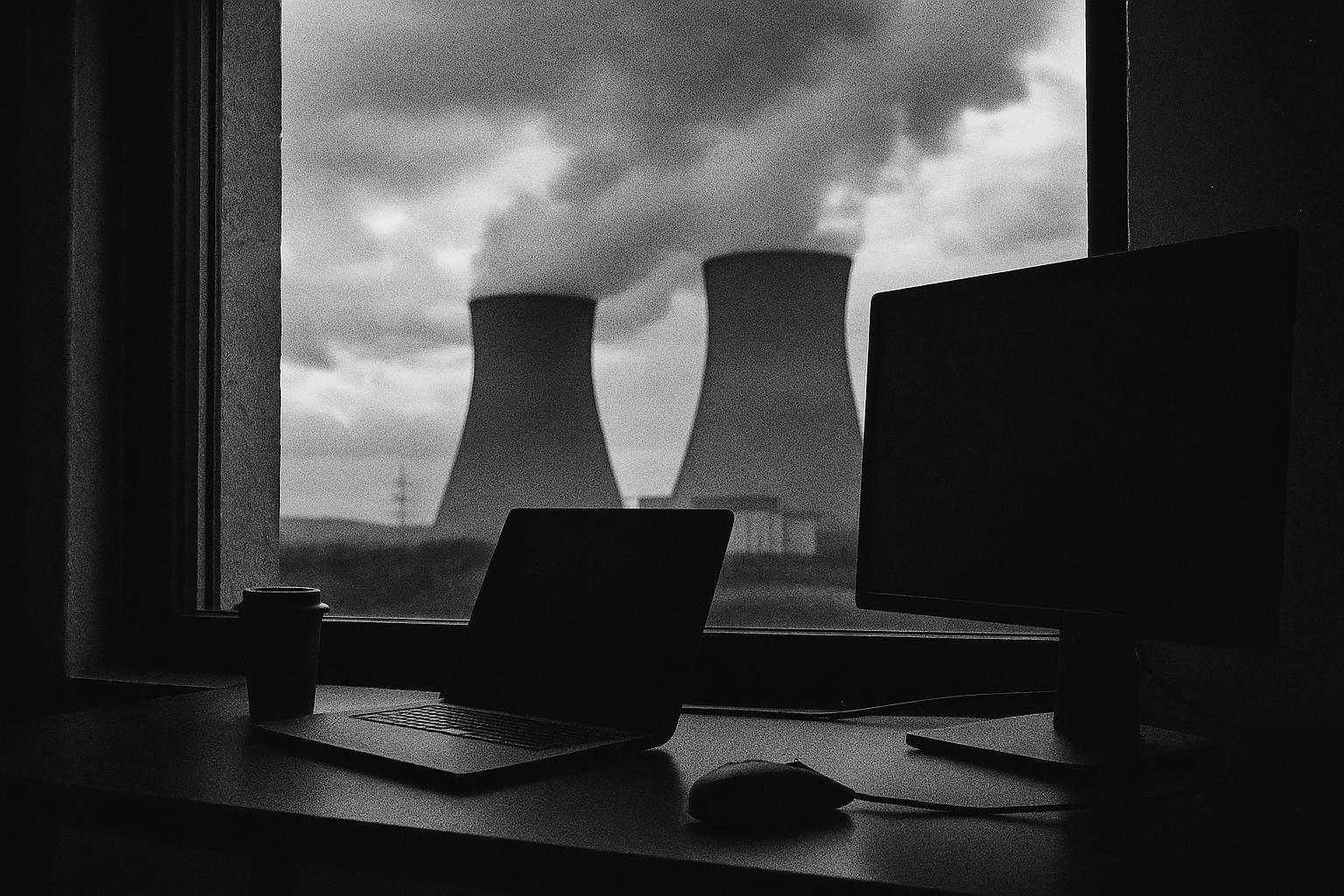
The most interesting AI data center innovation this summer is not a chip or a chassis. It is a calendar. The buildout is colliding with the slowest systems we have, permits and water rights. That shift is pulling nuclear specialists into the critical path, long before any fuel is loaded or any server is racked.
From megawatts to memoranda
On July 16, American Lawyer reported a rise in demand for nuclear energy attorneys, linking the uptick to surging power needs from AI data centers and noting that nuclear already supplies about 20 percent of U.S. electricity, while a 2024 Berkeley Lab study estimated data centers could consume up to about 12 percent of U.S. electricity by 2028. It is a sharp market signal. When law firms staff up, the bottleneck has moved from engineering to compliance.
The work spans site control, environmental review, federal and state licensing, water use, and the contracts that stitch behind-the-meter generation to compute campuses. None of this guarantees steel in the ground. It does confirm that the next watt of AI power is increasingly a permitting problem.
A small reactor, a big question list
On July 1, Nvidia and Valar Atomics announced a partnership around a small data center in Utah that the companies say will demonstrate water conservation, and they said a Valar microreactor demonstration powered Nvidia Blackwell chips, described as the first time a small reactor powered a data center. Nvidia also said it would adopt closed-loop liquid cooling for its DSX design, claiming it can cut facility cooling water from roughly 2.6 million gallons per megawatt per year to near zero, although those are design claims rather than independently measured results in production.
The Utah project underlines why permitting is the new frontier. Reuters reported that Valar has joined litigation with Texas and Utah that challenges the Nuclear Regulatory Commission’s authority over some microreactors and small modular reactors, raising unresolved questions about which regulators ultimately sign off and on what schedule. Add siting and water to that pile. Arid locations are attractive for cooling claims and land, yet they amplify scrutiny on water rights, thermal discharge, and long term hydrology even for helium cooled designs.
The hardest part of a small reactor may be the paperwork, not the physics.
The Department of Energy’s pilot program is a parallel effort. On July 1, Reuters noted the pilot’s goal to demonstrate three small reactors reaching criticality by July 4, but did not establish whether those targets were met. The signal is still the same. Federal attention is on timelines, while local permitting remains a gating factor.
Hybrid strategies meet real world clocks
Developers are trying firm power pairings to meet hyperscaler timelines. Oilprice reported that Blue Energy and GE Vernova are proposing a 2.5 gigawatt hybrid in Texas that sequences gas first, then small modular nuclear, with the idea that a shared campus could eventually serve nearby data centers. The details on customers, financing, and permitting beyond that report are not verified here, which is the point. The innovative part is the sequencing against regulatory reality.
Geothermal is on the same shortlist for firm, round the clock supply. On May 13, TechCrunch reported that enhanced geothermal developer Fervo Energy surged in its IPO, citing demand from AI data centers and interest in behind the meter connections if grid interconnection caps do not grow. In practice, these portfolios will be decided by whichever technology can clear permits, interconnections, and water constraints first, at an acceptable risk premium.
Voters, water, and the social license
The permitting challenge is not only about statutes. It is also about voters. In June 2026, a Reuters Ipsos poll found only about one in three Americans approve of the fast pace of data center construction, driven in part by concern over power and water. Public sentiment matters for conditional use approvals, water allocations, and the speed of any contested proceeding.
That is why the cooling story looms large. Nvidia’s closed-loop liquid design claims near zero facility cooling water use for DSX, which, if achieved at scale, could shift the politics of siting, but proof will require independently measured results in production environments, not press-day demos. Nuclear developers will face similar scrutiny on total water footprints, even for gas cooled or dry cooled systems, because communities evaluate the whole complex, not just the reactor vessel.
Policy tries to sprint, process walks
Policy makers are trying to pull timelines forward. In May 2026, the White House issued executive orders aimed at quadrupling nuclear deployment, explicitly positioning small reactors as an option to expand generation capacity. Orders can direct agencies to prioritize, but they do not repeal the process. Environmental reviews, safety cases, and water law still govern where a reactor or a gas plant or a geothermal field can serve an AI campus.
If you are a hyperscaler, the lesson is practical. The power train is now a legal and civic program as much as an electrical one. The critical hires are no longer only chip architects and substation engineers. They are permitting lawyers, water counsel, and community engagement teams. The line to lift compute is increasingly a line at the clerk’s counter.
There is opportunity in that constraint. The companies that convert design claims into measured, regulator accepted performance, and that earn local consent, will win time to power. Everyone else will keep discovering that in 2026, building an AI factory starts with building a docket.