
Kyiv's Technocrats Versus Its Generals: What Fedorov's Ouster Signals For Ukraine's War Machine
Kyiv's Technocrats Versus Its Generals: What Fedorov's Ouster Signals For Ukraine's War Machine
The removal of defence minister Mykhailo Fedorov has exposed a strain line between a data-first reform camp and Ukraine's military old guard, raising live questions about cohesion in command and steadiness in Western support at a critical moment in the war.
 Adrian ValeWorld Correspondent
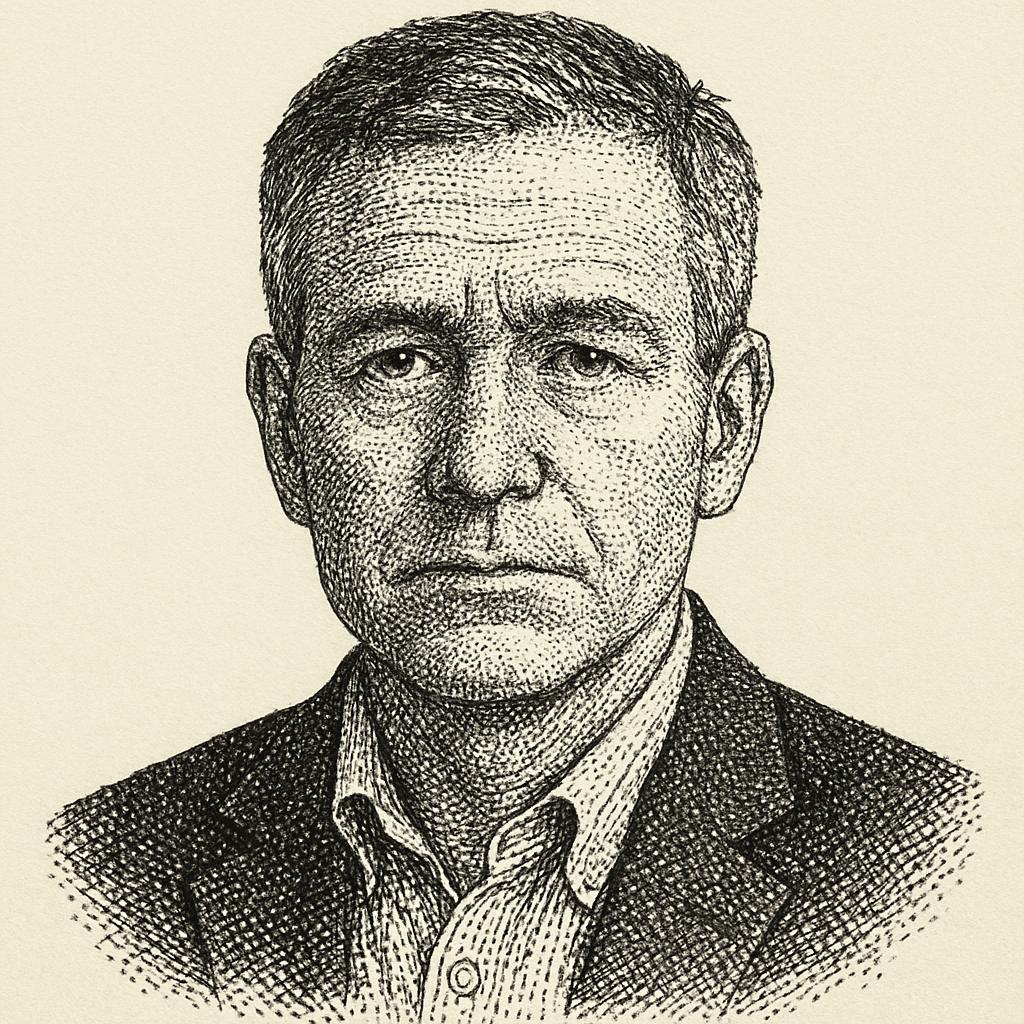
Mykhailo Fedorov is out after six months as Ukraine's defence minister, and the split it reveals is larger than a cabinet spat. Fedorov personified a technocratic push to wire the war effort for data, speed and cleaner procurement. His exit lands a test that Ukraine has avoided answering, whether a civilian reform project can live inside a command culture built for long campaigns and tight control.
The Guardian reports that the move startled senior European officials and sparked protests in Kyiv, an unusual reaction during wartime. It hit as Ukraine appeared to be gaining ground in several spheres against Russia, which magnified worry about continuity. Fedorov, 35, had pushed competitive tenders, procurement discipline and fixes for recruitment and training bottlenecks. He helped drive Ukraine's prolific drone program, drawing on his time as minister of digital transformation. Frontline troops, the report notes, credited him with persuading Elon Musk to cut unauthorised Russian Starlink access earlier this year, which they described as a significant advantage.
The institutional rub ran through his feud with the military chief of staff, Oleksandr Syrski. The two argued over strategy, as described in the reporting. Syrski, a 60 year old graduate of a Moscow command school, is cast as a micromanager prosecuting a bruising war of attrition against a larger foe. Fedorov favored a tech driven, improvisational approach focused on measurable results. On taking office he promised, we will take all the data and see what works. That logic informed incentives like a killing for points scheme to reward effective units, which some officers dismissed.
After his removal, Fedorov's account sketched friction hardening into blockage. When the president said he did not plan to replace Syrski, I said I would learn to work with him, Fedorov told reporters. All the initiatives we proposed began to be blocked, he said, adding that the general resisted face to face discussion. Instead of finding a way of defeating Russia asymmetrically, which is the commander in chief's job, he's found a way of splitting our country, Fedorov said.
President Volodymyr Zelenskyy rejected the idea that he had to pick sides. At a press conference with the outgoing British prime minister, Keir Starmer, he said he was being asked to choose between sides when honestly what I want most is unity. The Guardian's analysis frames this as a familiar critique of the president's management style, a difficulty in holding a cohesive senior team while balancing competing centers of power. It also cites a Kyiv Independent editorial that was blunter, arguing that Zelenskyy tends to dismiss top officials who become too popular and that, when forced to choose between technology and micromanagement, he chose the latter.
The mechanism that matters
The core policy question is simple. Can Ukraine's wartime operating system integrate a civilian tech reform agenda with a traditional command structure without degrading either. Reformers prize speed, transparency and iterative testing. Militaries prize unity of command, disciplined execution and secrecy. In peace, those logics can be sequenced. In war, they must share the same decision loop.
Fedorov tried to inject market and data logic into procurement and training, domains that touch every brigade and supplier. That can lift performance. It can also threaten established processes. When the reform impulse runs through the defence ministry rather than the general staff, the seams are political as well as technical. The Guardian describes Fedorov as a civilian without military service who irritated senior officers with a casual style and freewheeling speeches. Friction has been amplified by a battlefield where drones, electronic warfare and software compress the distance between headquarters choices and front line effects.
We will take all the data and see what works.
That was the promise. The fight was over who got to turn that promise into doctrine.
Why donors care about process
Western governments fund and equip Ukraine's war effort, and they track not only battlefield need but also the capacity to use aid well. The Guardian notes that senior European officials were startled by the dismissal, which hints at concern about predictability. That is not the same thing as a policy shift, and the report does not assert one. It does suggest that churn at the top, now a fifth defence minister in as many years, forces partners to revalidate relationships, working methods and controls with each reshuffle.
For donors, the risks are transactional. Procurement reforms need custodians who can defend them through ministerial rotations. Data driven initiatives need buy in from commanders who own training pipelines and doctrine. If civilian technocrats and the military old guard cannot strike a workable handshake, the system will default to the stronger node, usually the uniformed chain of command. That can sustain near term cohesion. It may also slow reforms that stretch scarce resources.
What to watch next
Three signals will show whether Kyiv can absorb this shock without fraying command cohesion or donor confidence.
- Whether procurement and recruitment changes that Fedorov launched continue on paper and in practice.
- Whether the general staff adopts, adapts or shelves performance metrics and incentive schemes that put data at the center of unit evaluation.
- Whether the president's office brokers a stable division of labor between civilian oversight and military execution that reduces public infighting.
The Guardian notes that infighting is not new in wartime leadership. What is distinctive here is the prominence of a civilian technocrat who became a symbol of a modernizing war machine. His removal has already produced demonstrations and sharp commentary at home. Whether it yields institutional learning or retrenchment will shape more than a single minister's legacy. It will determine how Ukraine balances innovation with cohesion under the pressure of a long war.