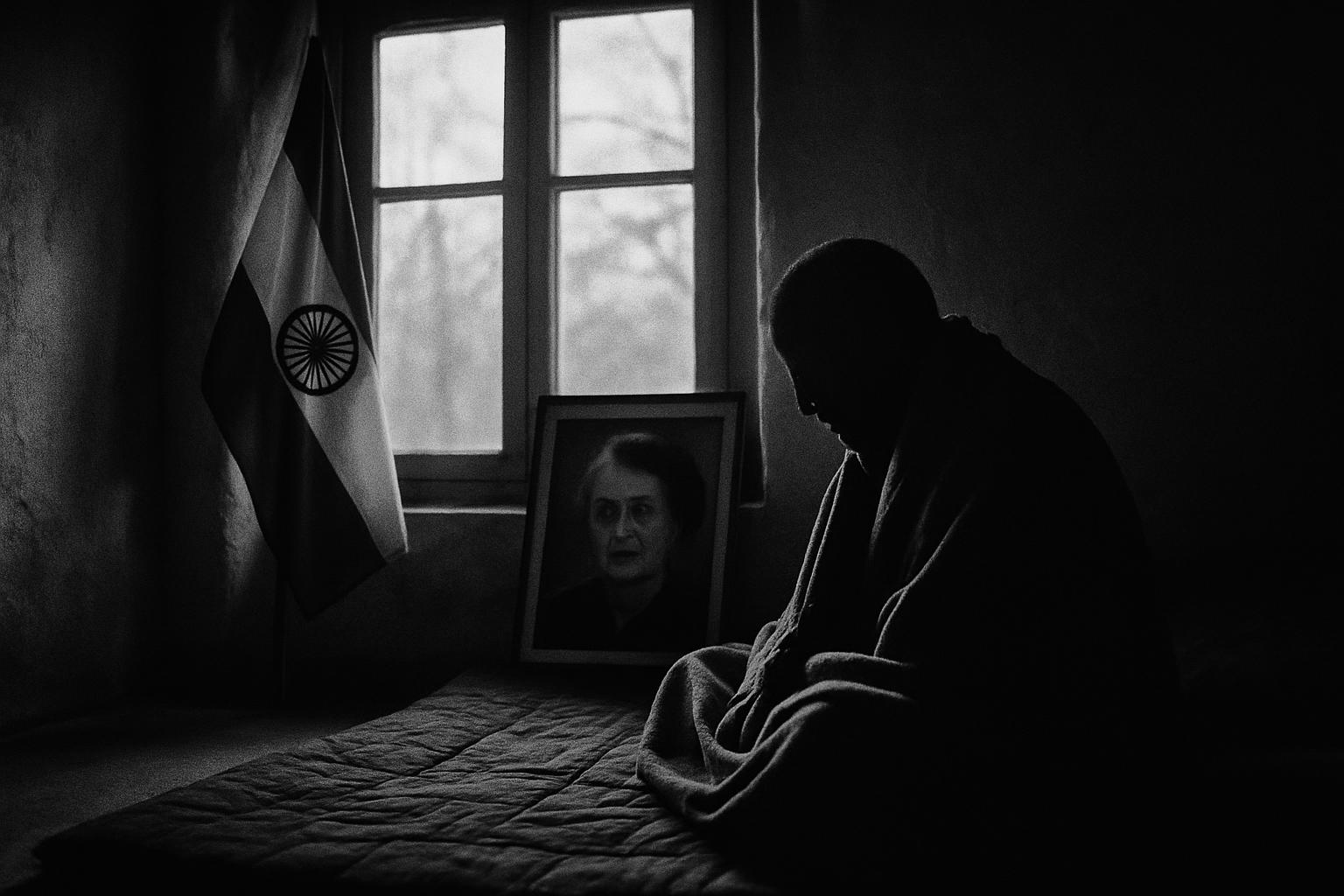
Congress Reaches For Indira-Era Memory As Wangchuk Fast Tests Opposition Strategy
Congress Reaches For Indira-Era Memory As Wangchuk Fast Tests Opposition Strategy
Sonia Gandhi’s nod to Sonam Wangchuk’s hunger strike revives a 1984 family episode to signal solidarity while the protest’s tight focus on exams skirts Ladakh statehood questions and keeps coalition calculations unresolved.
 Adrian ValeWorld Correspondent
Congress reached for legacy politics on July 17. At a meeting of its parliamentary leadership, Sonia Gandhi signalled support for Sonam Wangchuk’s ongoing hunger strike and recalled accounts that Indira Gandhi had intervened in 1984 to persuade Wangchuk’s father, Sonam Wangyal, to end a fast in Leh that sought Scheduled Tribe status for Ladakh. Congress leader Pawan Khera then visited Wangchuk at Jantar Mantar the same week. The party has not announced a formal resolution, and reports stop at noting Sonia Gandhi’s supportive remarks and Khera’s visit.
The mechanism matters. By invoking a familial precedent, Congress framed support for a present day education protest inside a lineage that carries weight in its bench and memory. It allows the party to align with a widely followed fast without rewriting the protest’s agenda or reopening old fault lines on Ladakh’s constitutional status. The current hunger strike, which began on June 28 alongside the Cockroach Janta Party sit-in, has been reported as centering on alleged exam irregularities and education accountability. Coverage of this phase has not established a formal tie to demands for Ladakh statehood or Sixth Schedule protections.
The legacy reference is not incidental. Regional accounts from 1984 describe Wangyal’s hunger strikes over ST status and Indira Gandhi’s role in ending one of them, a story that Congress sources are now retelling. The same family name has since become linked with campaigns that join education and ecology. Profiles and reporting recount Wangchuk’s March 2024 fast for Ladakh’s safeguards, his later march toward Delhi that year, and his periodic support for Leh Apex Body and Kargil Democratic Alliance mobilisations in 2025 that pressed for statehood and Sixth Schedule status. Those episodes help explain why a fast about exams today still resonates beyond the examination system.
In the near term, Congress is using memory to project institutional backing while leaving room to maneuver. On July 17, ABP reported Sonia Gandhi’s remarks to MPs and the recollection of Indira Gandhi’s 1984 intervention as sourced to party accounts. The Hindu the same day documented Khera’s on-site visit. That combination turns a personal fast into pressure that can be cited in Parliament when the Monsoon Session opens, without committing the party to the fuller suite of Ladakh specific demands that complicate coalition arithmetic across the opposition space.
Two other currents shape the politics around the protest. First, health. By July 14, reports flagged deteriorating indicators and hypoglycemic episodes on day 17, and on July 16 doctors publicly warned that Wangchuk’s prolonged fast had reached a critical stage. Opposition figures urged him to end the fast and promised to raise exam issues in Parliament. The public moral suasion adds urgency while keeping the focus on accountability in the education ministry.
Second, presence. On July 16, Rahul Gandhi’s absence from the protest site prompted a public row. Wangchuk’s criticism circulated, Congress leaders mounted a defense, and the Cockroach Janta Party’s founder argued that questions should target the government instead. The episode underlined how opposition choreography around a citizen-led protest can become a story of its own, even when the policy demand is clear.
What Congress has not done is as telling as what it has done. There is no confirmed party-wide resolution on the fast. There is no attempt, in the reporting at hand, to staple a Ladakh platform to the current sit-in. That restraint keeps the coalition math fluid. Several parties have constituencies on different sides of the Ladakh status debate, and fusing it to the exam agitation could split a tentative parliamentary front that is otherwise aligned on education oversight.
For the government, the calculus is different. The protest’s narrow focus makes it harder to dismiss as region specific or ideological. It asks a contained set of questions about paper leaks, ministerial accountability, and safeguards for students. If the demand set stays tight, it may also be harder for rivals to turn it into a broader referendum on Centre state relations, which would raise the political cost of inaction.
Memory politics can cut both ways. The 1984 episode is presented now through Congress sources and regional references. It is a reminder that personal fasts can end after an appeal from high office, but also that structural demands can outlive such endings. Scheduled Tribe recognition for Ladakhis did not immediately follow in 1984. Likewise, today’s education specific protest may achieve a concession on oversight without settling the longer arc questions that animate Wangchuk’s earlier campaigns.
In the coming days, two venues will matter. Parliament opens, where opposition MPs have said they will press exam issues. In court, a petition on alleged intrusive surveillance of protesters at Jantar Mantar is scheduled to be heard, with no established outcome yet. Between those forums sits the sidewalk, where a single body’s vulnerability has become an organizing device. Congress has chosen to stand near it, with a story from its own past as cover and compass.
The political test is whether that story helps translate public sympathy into legislative scrutiny, and whether doing so without importing the unsettled questions of Ladakh’s status preserves a broader opposition alignment. The answer will not come from a photo op alone. It will come from whether the Monsoon Session treats a citizen fast as a legislative brief, not just a headline.