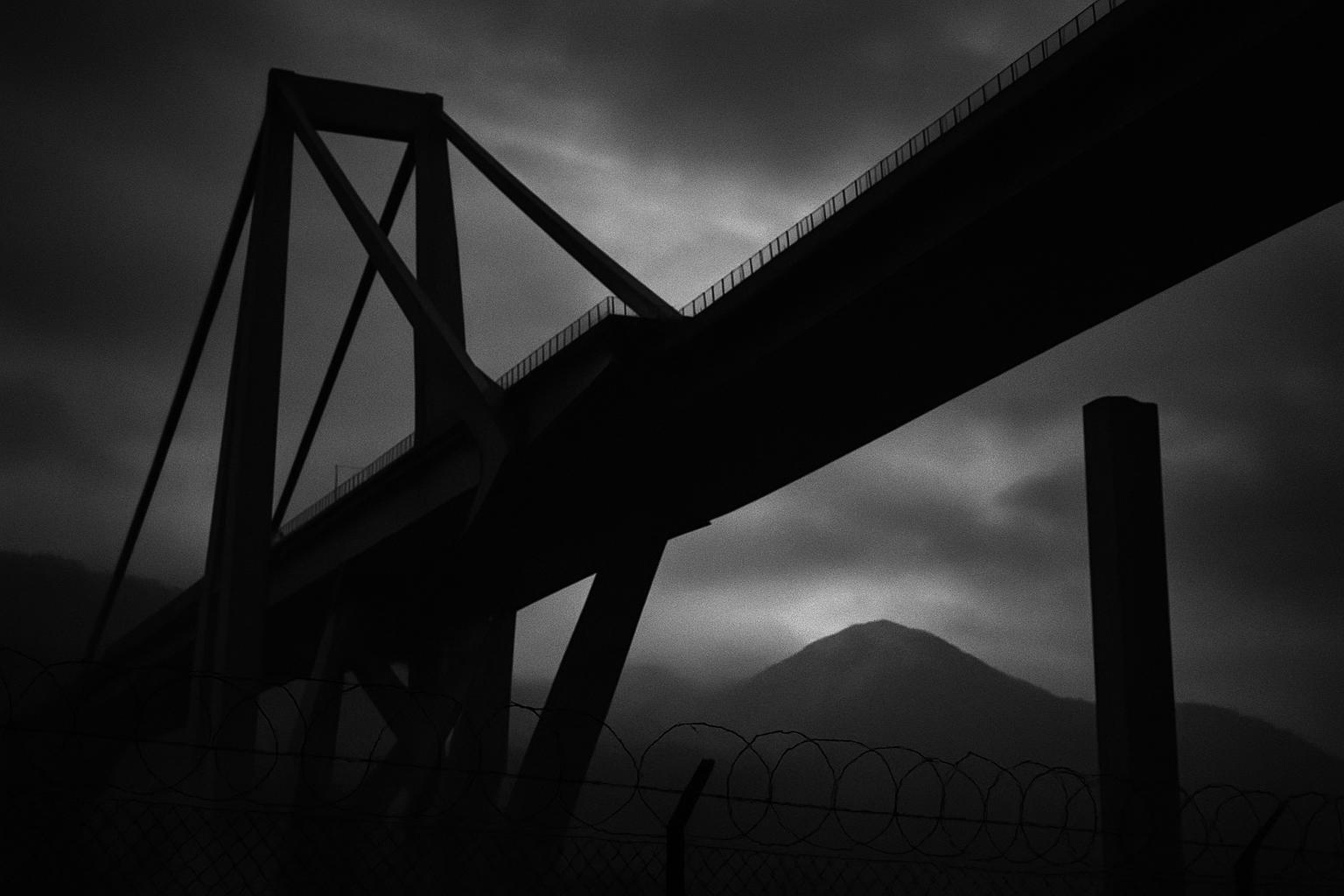
Genoa Bridge Verdict Puts Italy's Concession Model Under Judicial Scrutiny
Genoa Bridge Verdict Puts Italy's Concession Model Under Judicial Scrutiny
A Genoa court issued prison terms for former motorway executives in the Morandi bridge case, and while appeals are expected, the ruling sharpens how Italy writes, monitors, and enforces private concessions over public infrastructure.
 Adrian ValeWorld Correspondent
The Genoa court’s first-instance verdict in the Morandi bridge disaster reaches into the executive suite, and that is the point. The court handed former Autostrade per l’Italia chief Giovanni Castellucci a 12-year sentence, one of several prison terms for former managers and officials. Forty-three people died when the bridge collapsed in August 2018. Appeals are expected, but the decision already reorients the risk calculus for companies that operate under Italy’s concession model.
Prosecutors had asked for far heavier penalties across a vast roster. Fifty-seven defendants faced charges that included manslaughter and failure to maintain the viaduct. The court found 32 people guilty, and 25 were either acquitted or cleared because of statutes of limitations. Among those sentenced were Michele Donferri Mitelli, a top motorway official who received 11 years, the former number two at the operator, Paolo Berti, who received five and a half years, Spea’s former chief executive, Antonino Galatà, who received five and a half years, and Mauro Coletta, a former senior official at the transport ministry’s motorway directorate, who received five years. Prosecutors had sought a combined 400 years in prison. The court will publish its reasoning, and appeals will test it, but the roster of convictions signals that liability can climb up organizational charts as well as across them.
The legal mechanism is straightforward. Italy entrusts private operators with public assets through concession contracts. Those deals allocate maintenance duties, specify oversight channels, and set penalties for breach. In Genoa, prosecutors argued that maintenance of an aging structure had been delayed, and that warning signs were ignored. Defense lawyers countered that a design flaw, including the fact that a specific cable was encased in concrete, explained the collapse. The court convicted dozens of defendants. That outcome signals the judges accepted, at least in part, a theory that managerial and supervisory failures mattered. The verdict does not end the debate about causality, and appeals are pending, but it narrows how future managers will assess their exposure when they sign, supervise, or certify works.
Three levers shift after a ruling like this. First, boards will revisit risk registers. Concessionaires already price regulatory and operational risk. Now they must treat criminal exposure for maintenance lapses as a live variable. That means bigger compliance functions, more intrusive inspections, and a paper trail that shows timely interventions. It also means rethinking incentives that reward deferred spending. If managers face personal jeopardy when deterioration is flagged but not fixed, delayed maintenance ceases to be a neutral budget choice.
Second, the state’s role as monitor acquires teeth. The conviction of a former top official at the transport ministry’s motorway directorate indicates that accountability can also reach into public oversight. Ministries and independent engineers who certify safety will need clearer lines of responsibility, escalation protocols, and audit rights that go beyond box-ticking. The lesson is procedural rather than political. Write duties precisely, enforce them predictably, and document exceptions.
Third, the concession contract itself will tighten. Expect more granular key performance indicators for structural health, automatic triggers for load restrictions or closures when thresholds are crossed, and clauses that mandate third-party diagnostics after material findings. Payment mechanisms can be tied to verified maintenance outcomes instead of planned spending. Termination and step-in rights will be drafted with fewer ambiguities. None of this requires a new ideology, only more traceability and fewer blind spots.
The corporate response has already started. On the eve of the trial, Autostrade’s current head, Arrigo Giana, issued the company’s first public apology for the collapse, and he said the firm has new managers, tighter monitoring, and forward planning to eliminate risks. Victims’ families called the apology inadequate. Whatever shareholders think, the court record now sits alongside investor presentations. Lenders and insurers will ask for evidence that the new controls bite.
The roster of convictions signals that liability can climb, not only spread.
The process has been long. The collapse took place in August 2018. Investigations lasted nearly four years, the trial another four, with more than 280 hearings. That timeline is part of the deterrent. A spotlight that endures across executive tenures forces institutional fixes rather than one-off scapegoats. It also raises a practical issue for operators. Governance must survive personnel churn. Succession planning, data retention, and continuity of maintenance strategies will matter in court as much as in operations.
What does this mean beyond Italy. The answer is narrow by design. Legal systems differ, and concession regimes inside Europe are not interchangeable. Still, in jurisdictions that use similar public-private structures, the Genoa verdict will land on the desks of regulators and boards. It will be read not as a demand to renationalize assets, but as a prompt to specify who knew what, when, and with what authority to act. If ambiguity remains, prosecutors now have a playbook to probe it.
For families of the 43 victims, this is the start of a judicial reckoning, not the end. The court’s decision is a first step that assigns responsibility to named individuals, within a system that allocates private stewardship over public assets. Appeals will follow, and the legal theories will be tested again. But in the meantime, concessionaires, auditors, and public monitors have a clear signal. Oversight is part of the asset, not an externality to it.