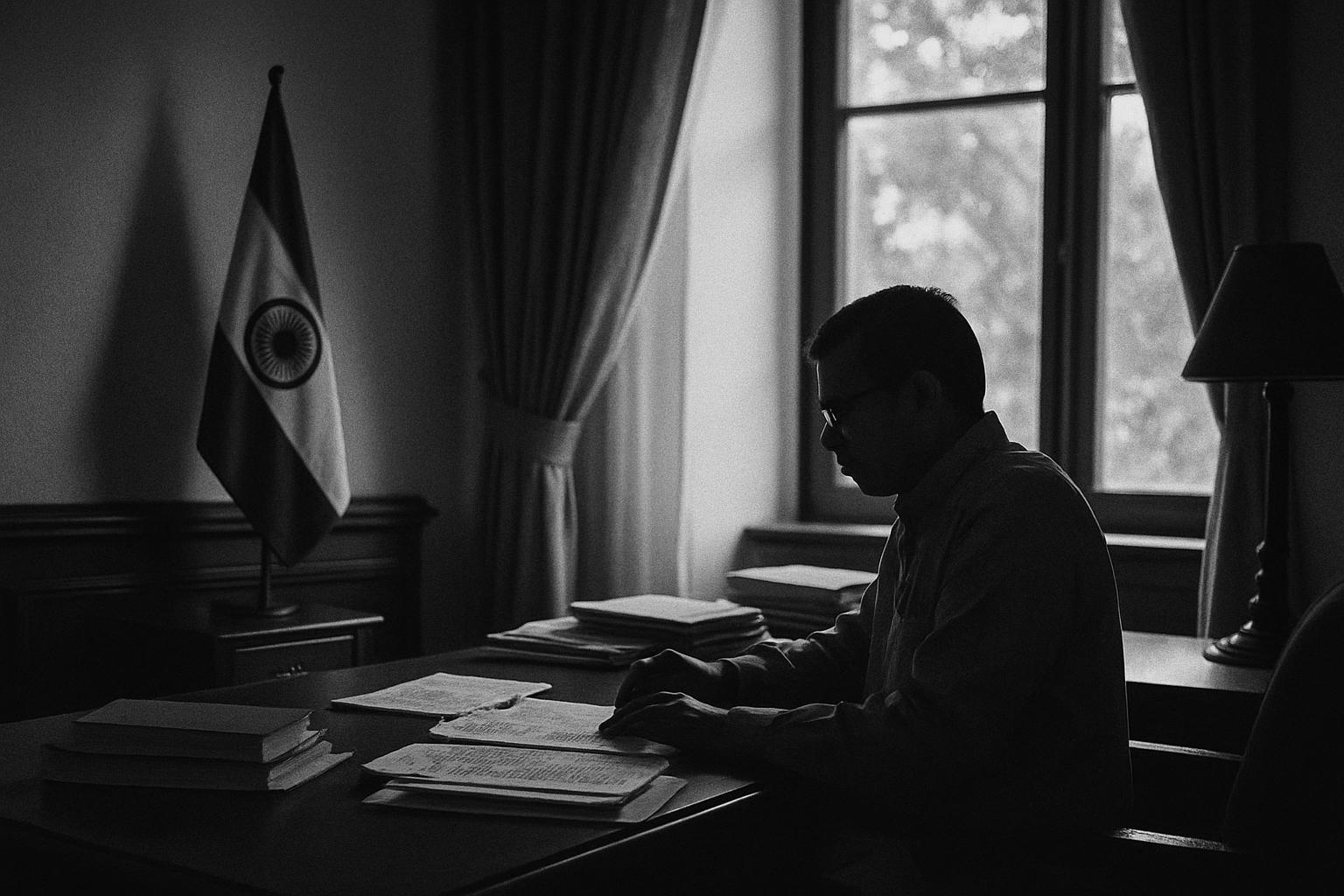
Pralhad Joshi Takes Charge Of Education, Continuity For Exams And Policy Work
Pralhad Joshi Takes Charge Of Education, Continuity For Exams And Policy Work
With Pralhad Joshi assuming additional charge a day after Dharmendra Pradhan resigned amid protests, the signal is continuity in exam calendars and ongoing policy work, with no change flagged in the cited reports.
 Veera NairTET TV Anchor — India Desk
A quick handover at the top of the Education Ministry rarely offers drama. It offers a test of continuity. On Sunday, Pralhad Joshi took charge as Union education minister, a day after Dharmendra Pradhan resigned amid student protests in New Delhi and nationwide, according to the Times of India report. President Droupadi Murmu accepted Pradhan’s resignation, and Joshi thanked the Prime Minister for the responsibility, pledging to work with humility and honesty under his leadership, as reported by Mint.
The timing matters because the ministry is steward to time-bound deliverables. Examination schedules, admission windows, and academic calendars at central institutions cluster in the monsoon months. The transfer of charge within twenty four hours signals that the government moved to avoid a vacuum at the apex. The reports cited here do not announce any change to upcoming exam timelines or to the operational rhythm of the ministry. The immediate cue is continuity, not disruption, in how the file work proceeds.
What Changed, And What Did Not
What changed is the signatory at the top. Joshi has been entrusted with the Education Ministry in addition to portfolios of Consumer Affairs, Food and Public Distribution, and New and Renewable Energy, as reported by Mint. Before this, between 2019 and 2024 he served as Union Minister for Parliamentary Affairs, Coal and Mines, and after the 2024 election cycle moved to his current economic and energy briefs, the Times of India notes. He is a five term MP from Dharwad, with a background in business and long organisational experience in the BJP, the same report adds. Those are visible markers of administrative familiarity with complex ministries and coalition workflows in government.
What did not change is the underlying machinery. Departments, autonomous bodies, and examination agencies are designed to run on notified calendars. The cited reports do not indicate any change in mandates, leadership below the minister, or policy direction. They also do not announce new timelines, fresh staffing, or a redrawn roadmap. On the day of a handover, the absence of such signals generally means that standing instructions remain valid until stated otherwise. In practical terms, students and institutions would be justified in expecting previously notified steps to continue, unless the government issues a fresh order. The reports at hand do not cite any such order.
The Context Of Protest, Without Second Guessing Motives
Pradhan’s resignation came amid protests at Jantar Mantar and nationwide, the Times of India reports. The same report says the protest was called off after a delegation met Union ministers Jagat Prakash Nadda and Jitendra Singh, and both sides reached a mutual understanding on key demands. The Mint report adds that President Murmu accepted the resignation with immediate effect, and records Joshi’s first public stance, that he would discharge his responsibilities with humility and honesty. These are the facts in the public domain in the reports cited here. The sources do not offer an official rationale beyond those events, and this column does not speculate on motives for the reshuffle.
The near term implication of that context is procedural, not rhetorical. With protests having been called off as per the Times of India report, the ministry’s interface with student concerns will now route to the new minister’s office. In the absence of new announcements in the reports, the relevant takeaway for students is that the channel for grievance redressal and for communications on examinations is now anchored to Joshi’s office.
What To Watch In The Coming Weeks
First, exam calendars and admissions. The reports here do not indicate any change to notified schedules. A quick handover and the minister’s emphasis on duty point to continuity in day to day administration. Stakeholders will look for the first public review by the minister of upcoming examinations, as well as any updates from the relevant agencies. As of the cited reports, none have been announced.
Second, ongoing policy implementation. The sources do not refer to any specific policy shifts. They also do not indicate changes to the National Education Policy or to related programmes. In the absence of stated changes, the working assumption for institutions will be to proceed on current instructions. Any departure would require a formal communication. The articles cited offer no such signal yet.
Third, portfolio management. Mint reports that Joshi holds Consumer Affairs, Food and Public Distribution, and New and Renewable Energy, and that he has now taken additional charge of Education. That combination suggests coordination demands across economic delivery and energy transition briefs, now augmented by education. The government has handled similar multi portfolio assignments in the past, and the operational test is cadence, not novelty. Early indicators to track are meeting schedules with examination bodies, with higher education regulators, and with school education departments. The reports do not list such meetings yet.
The handover has been executed quickly, the tone is one of duty, and the stated facts point to continuity until an official order says otherwise.
The Person At The Desk
It is useful to know the résumé because ministries are lived through files and convening power. The Times of India notes Joshi’s five consecutive wins from Dharwad since 2004, his stint as Parliamentary Affairs Minister, and subsequent leadership of Coal and Mines. It also records his current cabinet responsibilities in consumer affairs and energy. Mint records his public pledge to work with humility and honesty, and his public thanks to the Prime Minister for reposing faith in him. Those details describe a minister used to cross-portfolio coordination and legislative management.
That background matters for education for one immediate reason. A minister’s early weeks typically centre on continuity briefings and a calendar check. The cited reports do not detail those meetings or their outcomes. They do, however, establish that the minister is in place and has made his first statement of intent. For parents and students scanning headlines, that is the actionable information today. Schedules remain as previously communicated unless the government says otherwise. Policy work continues under the established apparatus unless an official update is issued. The sources cited here contain no such update at this time.
The watchword for the coming fortnight is steady state. If the government intends a course correction, it will have to be communicated in writing. If it intends continuity, that too will become evident through the absence of change notices and through routine briefings. Until then, the headline is the handover, and the mechanism is continuity by default.