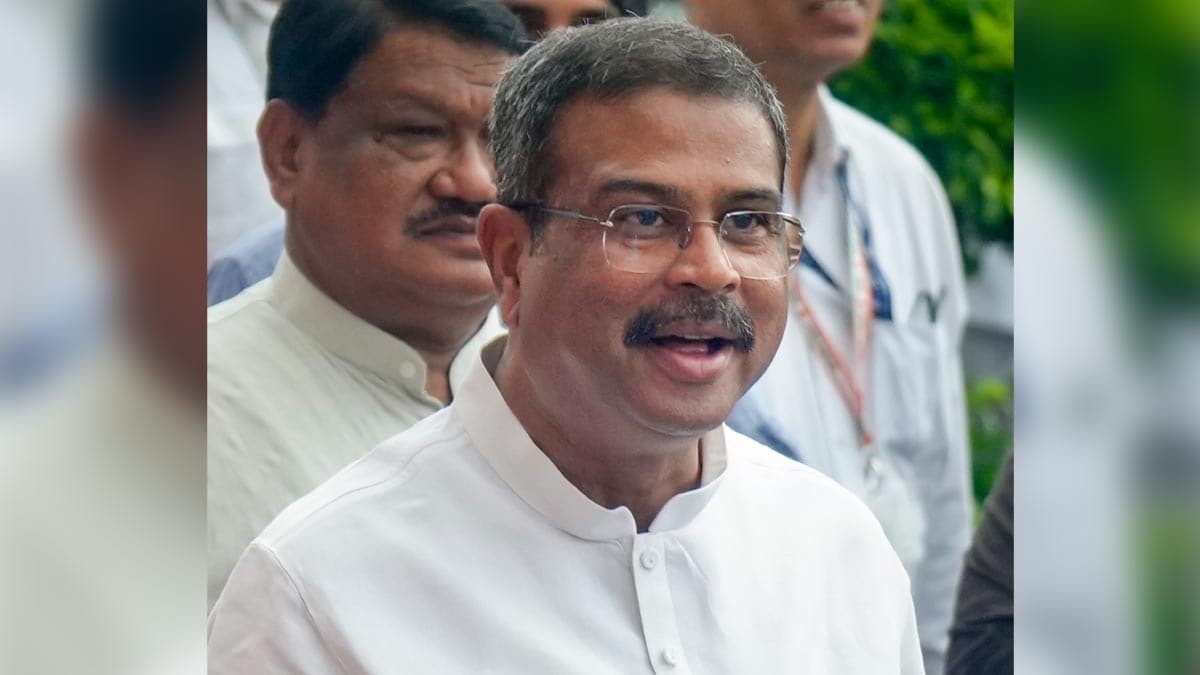
Pradhan’s Resignation As Pressure Valve In The NEET Unrest
Pradhan’s Resignation As Pressure Valve In The NEET Unrest
By saying he submitted his resignation on July 25 and invoking student protection and national unity, Dharmendra Pradhan opened space to reset talks with protest leaders while trying to cool street momentum over NEET irregularities.
 Veera NairTET TV Anchor — India Desk
Dharmendra Pradhan’s move on July 25 did more than announce a personal step. By saying he had submitted his resignation to Prime Minister Narendra Modi, the Education Minister pulled a pressure valve in a contest that had shifted from exam lapses to a wider crisis of confidence. A single act of assumed responsibility can slow escalation, pull oxygen from the street, and frame the next round of talks.
What is new is clear and limited. Pradhan said he had sent in his resignation, and he linked it to the uproar over irregularities in the NEET system. He said he wanted to prevent anti national forces from exploiting the unrest and to ensure students did not get trapped in legal complications so they could focus on studies and careers. These reasons appeared in his public posts and letters on July 25. Both Al Jazeera and The Week reported the submission and traced his framing to student protection and national unity. Whether the Prime Minister formally accepted the resignation was not confirmed by those outlets at the time of writing. One outlet carried a claim of acceptance, but the others did not corroborate it, so the status stayed publicly unconfirmed in multiple reports. (Al Jazeera, The Week, Sunday Guardian)
The timing intersected with visible unrest. On July 25, hours before another round of talks had been planned between protest leaders and federal ministers, police used tear gas on demonstrators in New Delhi. That marked a hard edge to a movement that had kept steady pressure for weeks. The same Al Jazeera account noted it was unclear whether the later talks would proceed after the resignation announcement. That uncertainty matters, because a pressure valve only works if what follows at the table is credible. (Al Jazeera)
For weeks, protests tied to NEET irregularities had grown from a niche grievance into a national point of contention. The satire movement Cockroach Janta Party became a banner for anxious students and supporters. Among their core demands, repeated in multiple reports, was the exit of the Education Minister. Pradhan himself referred to exam mafias and malpractice as threats to meritorious students. In that context, his step created the optics of personal accountability without presuming the technical fixes to the testing ecosystem. (Al Jazeera, The Week)
How A Valve Works
A political resignation can change incentives fast, even before formal acceptance is confirmed.
- It answers a headline demand without conceding on the architecture of exams and recruitment. Movements often consolidate around a personified symbol of accountability. Meeting that demand can lower the urgency of mobilisation in the short run.
- It resets the sequence of dialogue. When a named official steps aside or offers to, negotiators can pivot from who is responsible to what must be repaired and when.
- It puts time on the clock. Systems need a few cooler days to set up committees, legal steps, and communication. A resignation letter can buy that time.
These are functions, not attributions of motive. Pradhan has said he acted to shield students and protect national unity. He also said he had taken responsibility for the exam mess from day one. Those statements sit on the record in his posts. The question for both sides is how the move shapes the next bargaining round.
What Both Sides Must Prove Next
Consider the street side. A visible concession forces a choice between consolidation and escalation. In many Indian protest cycles, the first win is followed by a checklist for talks, with deadlines and independent oversight. If the second round of talks that had been planned for July 25 resumes in the coming days, the agenda will likely tilt from personalities to procedures. Protest leaders have flagged additional asks in public posts, but broader confirmation beyond the sources at hand was pending. Until that is nailed down, the floor of the negotiation is the resignation and the ceiling remains open. (Al Jazeera)
Now look at the government side. Previous official messages have pointed to future legislative and institutional measures against paper leaks and cheating, including fast track courts, as proof of forward movement. If talks are to be recalibrated, the centre of gravity will be implementation credibility. That means clear timelines for investigations, exam retest protocols where needed, and safeguards that insulate future cohorts. A personnel change can set the stage for these steps, but it cannot substitute for them. (Al Jazeera)
The events on July 25 also underline the need to keep channels open when pressure spikes. Tear gas on the streets and statement politics online can breed a cycle in which each side reads the other as inflexible. A resignation letter can interrupt that reading because it shifts attention to process. Process here is not a pejorative. It is the bridge between anger and remedy. It allows for joint fact finding on irregularities, for third party technical audits of exam systems, and for public updates that reassure students who are watching every announcement with anxiety.
What should readers watch for next. Three signals will show if the valve is working.
- Whether talks resume and produce a joint calendar of actions, with milestones that can be checked in public.
- Whether law and order responses stay proportionate while dialogue proceeds, especially in Delhi where tempers have run high.
- Whether communication with students becomes precise, frequent, and free of mixed messages.
On the narrow factual core, the scene is bounded. As of July 25, Pradhan said he had submitted his resignation. Protests continued, and police used tear gas in New Delhi on the same day. A second round of talks had been planned for later that day, and it was unclear if it would proceed. The wider meaning is that personal accountability can be used to create negotiating space, especially in disputes where the affected population is young, numerous, and attentive. If the space is filled quickly with credible steps, the pressure will ease. If it is not, the street will return.