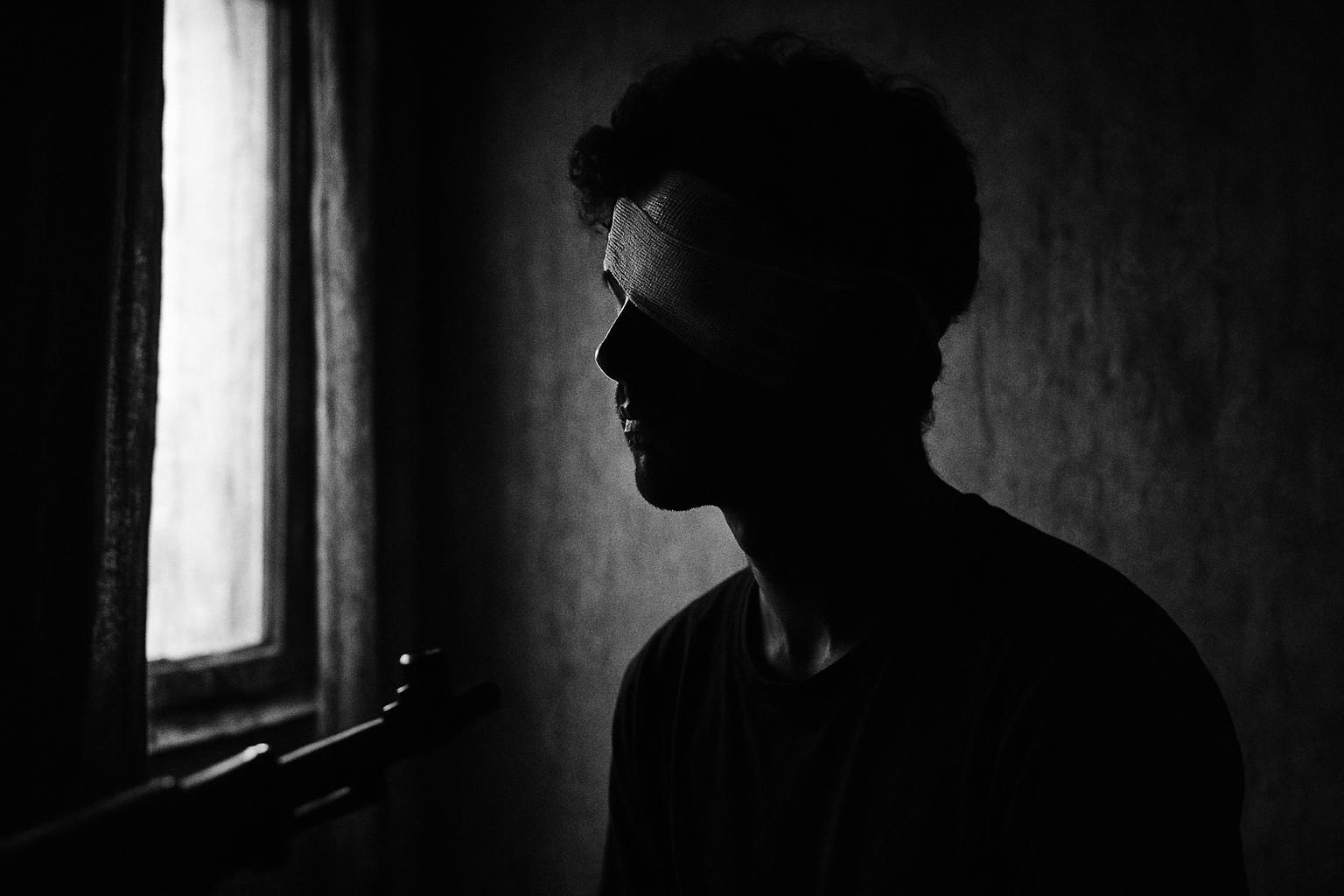
Pellet Guns In Exceptional Use, Says Supreme Court, As Srinagar Study Maps Psychological Toll
Pellet Guns In Exceptional Use, Says Supreme Court, As Srinagar Study Maps Psychological Toll
The court’s graded response doctrine meets clinic data from Srinagar that records depression, PTSD and substance-use risks among eye-injury survivors, sharpening the question of what proportionality must look like in practice.
 Veera NairTET TV Anchor — India Desk
The Supreme Court has placed pellet guns within a graded response, to be used in exceptional circumstances, while it refrains from a blanket ruling and turns to the facts of specific incidents. That legal calibration now sits against clinical evidence from Srinagar documenting psychiatric morbidity after pellet eye injuries. The friction is not rhetorical. It is about what proportionality demands in training rooms, armouries and clinics.
What the Bench put on the table
A Bench led by Chief Justice of India Surya Kant noted that police rules allow pellet guns in exceptional circumstances as part of a graded approach to disperse protests. Justice Joymalya Bagchi said, as recorded in open court, that one of the graded responses is the use of pellet guns. The court agreed that the state must meet students protests with non-violence, while also flagging the risk of unscrupulous elements hijacking bona fide protests and driving them into violence. The Bench kept distance from a blanket ban and indicated it will test particular episodes where pellet guns may have been used indiscriminately or arbitrarily in violation of existing regulations on crowd control.
The petition before the court, filed by former IPS officer Yashovardhan Azad and two pellet injury victims, seeks a direction to ban kinetic metallic pellets on civilian assemblies. The court termed the prayer vague and asked counsel Vrinda Grover to amend the plea to directly challenge the rules that enable pellet use. It also asked the Union government, through the Solicitor General, to place on record the standard regulations or protocol that guide police responses to unlawful assemblies. That request goes to the heart of graded response. Without written, public protocols that define thresholds and authorisations, proportionality can collapse into improvisation.
The immediate factual canvas is the July 20 events at Jantar Mantar. The petition alleges that Rapid Action Force personnel fired pump-action guns that sprayed splinter-like pellets at fleeing protestors, including people with arms raised in surrender. The petitioners seek preservation of duty logs, weapon and ammunition logs, and the RAF deployment register for that day. The Bench has already directed safekeeping of CCTV, body cam and drone footage, along with wireless and Police Control Room communications, and it ordered comprehensive treatment for one injured petitioner in Delhi. These are steps that anchor any later judicial examination in documentary evidence, not after-the-fact recollection.
Justice Bagchi also sounded the government on equipping the police with protective gear. The logic is behavioural. Defensive equipment like helmets can give personnel a few seconds to pause and think before using force. That pause is the operating space in which a graded response, and the legal requirement of proportionality, can be sustained.
Exceptional use, the court said, belongs inside a graded response, then must be tested against rules and records.
What the clinic has counted in Srinagar
A 2018 research paper from Government Medical College, Srinagar, studied 380 pellet victims from the 2016 protests. The cohort comprised 333 males and 47 females. The age profile skewed young, with 155 cases in the 10 to 20 group, equal to 40.79 percent, and 154 cases in the 21 to 30 group, equal to 40.53 percent. Of those with psychiatric morbidity, 56.97 percent were from rural areas and 43.03 percent from urban areas. Most belonged to nuclear families at 75.23 percent, followed by joint families at 18.89 percent and extended families at 5.88 percent.
On injury pattern, 219 cases or 57.63 percent were classified as simple, and 161 or 42.37 percent as grievous under the definitions drawn from sections of the earlier Indian Penal Code. The study recorded that a majority of 260 suffered eye injuries, and 100 others reported limb injuries. Psychiatric outcomes were not marginal. Among those with eye injury, 30.38 percent reported depression, 16.92 percent adjustment disorder, 13.08 percent panic disorder and 10.77 percent post-traumatic stress disorder. Within the subgroup of 161 grievous injuries, the largest block, 65 cases, had depression, followed by PTSD, adjustment disorder and panic disorder.
Limb injuries did not imply psychological immunity. In that subset, 29 percent had no psychiatric illness, while the remainder were distributed across mixed anxiety with depression, specific phobias, hypomania, PTSD, substance abuse, generalised anxiety disorder, panic disorder, adjustment disorder and depression, with each diagnosis comprising around 2 percent to 16 percent. The denominator is the studied cohort, not a general population. The study does not claim all-India prevalence. It confines itself to these 380 cases in a particular conflict period and setting.
Another data stream, published in the Indian Journal of Ophthalmology in 2022, underscores the ocular risk profile in the 2010 protests. In that analysis, 30 percent of pellet victims reported eye injuries and 50 percent had open globe injuries. CT scans of the orbits were performed in 662 patients, equal to 85.2 percent. Intraorbital foreign body was reported in 415 patients, equal to 62.7 percent, and intraocular foreign body in 180 patients, equal to 27.2 percent. Vitreous haemorrhage was detected in 204 patients, equal to 33.8 percent. These numbers describe mechanism as much as outcome. High velocity, small projectiles penetrate or perforate the globe, leaving retained fragments that require imaging, surgery and long follow-up.
Proportionality on paper, proportionality in practice
In the courtroom, exceptional use sits inside the legal doctrine of necessity and gradation. In the clinic, eye-injury survivors carry elevated risks of depression, PTSD and related disorders that need systems to diagnose and treat early. The connective tissue between the two is operational detail. Written protocols that define exceptional circumstances, real-time authorisation trails, meticulous logs of weapons and ammunition, mandatory body cams, and post-incident medical pathways can translate a graded response from principle to practice.
The Supreme Court has said it will examine particular incidents rather than decide a blanket ban or blanket endorsement. That path puts a premium on evidence. The petitioners have asked the court to secure RAF logs for July 20, and the Bench has already ordered preservation of multiple streams of audiovisual and wireless records. Those records, read alongside standard operating procedures that the government has been asked to file, will allow a case-by-case test of indiscriminate or arbitrary use against the template of regulation.
The Srinagar cohort meanwhile offers a ledger of consequences for survivors. It does not generalise beyond its sample. It does remind policymakers that every use of a weapon classed as less lethal can carry long psychological tails, especially when eyes are involved. If exceptional circumstances justify pellet use in a graded response, then exceptional care is owed afterwards. That is what proportionality, properly understood, would demand in India today.