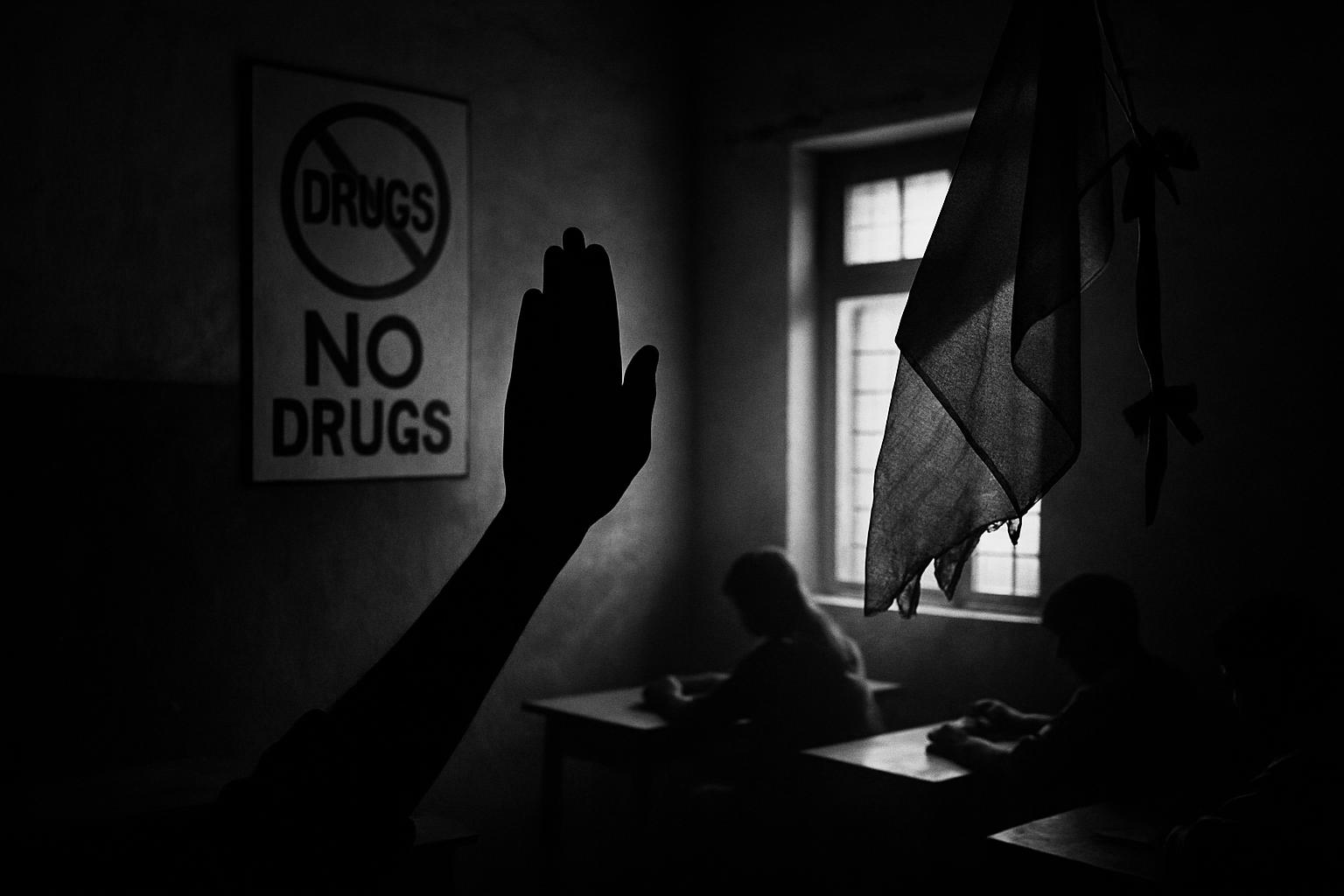
A 100-Week Sunday Pledge To Build Drug-Free Campuses
A 100-Week Sunday Pledge To Build Drug-Free Campuses
The 100-week Nasha Mukt Yuva Abhiyan bets on Jan Bhagidari and a fixed Sunday slot to turn awareness into habit, but its promise will rest on steady campus programming, simple data capture and strong state coordination.
 Veera NairTET TV Anchor — India Desk
The newest national drive against drug abuse is built on routine, not spectacle. On August 2, Prime Minister Narendra Modi launched the Nasha Mukt Yuva for Viksit Bharat Sankalp Abhiyan with a calendar that returns to the task every Sunday for 100 weeks. The pitch is simple. Use Jan Bhagidari, or participatory mobilisation, to make drug-free living visible across colleges and communities, week after week.
The opening crowd was large. The government said more than 125 spiritual and public organisations, educational institutions and industry associations backed the launch. Events ran at over 28,000 locations, and more than one crore youth took part, alongside several Chief Ministers and Governors. National mobilisation is not new. The design choice here is the cadence. The pledge is to return every Sunday for 100 weeks.
"The pledge taken today will continue over the next 100 weeks. Every Sunday, activities related to art, culture, sports, meditation, spirituality, and service will be organised. The message of a drug free life will reach more and more people."
What a weekly rhythm can deliver
A weekly slot builds habit, which outlasts one-day awareness. For campuses and youth groups, Sundays can host peer-led cultural showcases, sports leagues, guided meditation circles and community service in rotation. Repetition supports small, reliable formats. A one hour open mic on substance-free student life, a seven a side football fixture, or a supervised volunteering hour at a neighbourhood cleanliness drive are all viable. The aim is to turn awareness into social norming, one week at a time.
A schedule also allows sequencing. Month one can focus on risk recognition and common myths. Month two can emphasise coping strategies and help seeking. Later cycles can centre stories of recovery, practices for self regulation, and service projects that give students prosocial anchors. Because the campaign names art, culture, sports, meditation, spirituality and service, organisers can set predictable rotations that lower planning friction.
The coordination burden, seen from the ground
The scale of the launch implies a relay from Union messaging to state coordination to campus execution. Each Sunday demands three basic layers.
- Content and toolkits. Templates for sessions, playlists and activity guides stop volunteers from reinventing the wheel every week. Without them, quality will vary widely.
- Venue and facilitation. Colleges will have to schedule spaces, assign faculty coordinators or trained peer leaders, and manage attendance. Exams, admissions and hostel schedules will collide with Sundays in some weeks.
- Feedback and reporting. A minimal attendance log and a short reflection form can show whether activities are reaching first time participants or only the already converted.
States will have to act as capacity multipliers, not mere transmitters. The presence of several Chief Ministers and Governors at the launch signals political backing. Execution will rest on state youth affairs departments, higher education directorates and district administrations nudging principals and wardens to lock Sundays early, while keeping campus autonomy intact. A simple monthly calendar issued at state level, with two or three suggested activity tracks and a helpline linkage, can prevent last minute scrambles.
Jan Bhagidari is a feature, not a shortcut
The campaign banks on community participation through spiritual and public organisations, educational institutions and industry associations. That is a strength if roles are clear. External partners can provide facilitators for meditation, coaches for weekend sports, performance troupes for cultural pieces, or spaces for off campus events. Colleges should retain custodianship of student safety, consent and inclusion norms. A transparent sign up process for partner sessions, plus background checks where relevant, will keep standards credible.
Link Sunday energy to weekday support
Awareness without access to care can backfire. The Prime Minister urged families not to hide cases of addiction and to seek professional help, noting that rehabilitation centres are available. Each campus can turn that nudge into visible referral pathways. Every Sunday event should end with a discreet note on where to seek help on Monday. That includes counselling contacts, rehabilitation centre locations, and crisis protocols. Student volunteers can be trained to recognise distress and to escalate appropriately, so the campaign does not become a performance without follow through.
Measure progress without overpromising
The speech highlighted stringent action on traffickers, with arrests up compared to previous years and drugs worth thousands of crores seized. That is a law enforcement track. The Sunday cadence is a public health and youth development track. Conflating the two would blur accountability. For the weekly programming, three indicators are realistic and within reach.
- Reach, counted as unique participants over time rather than raw footfalls.
- Retention, the share of participants who attend at least once in three months.
- Referral, the number of help seeking connections made to counselling or rehabilitation services.
These can be recorded by colleges and district youth offices without claiming immediate prevalence shifts. The off limits zone is grand claims of addiction reduction without cohort data or independent evaluation.
Avoid fatigue over 100 Sundays
Two years is a long arc. To keep energy up, organisers can place anchors each quarter, such as an inter college sports day or a regional cultural conclave, while keeping most Sundays light and predictable. Rotate leadership to new batches each semester, celebrate recovery stories with dignity, and balance didactic content with peer-led creativity. The mix of art, culture, sports, meditation, spirituality and service gives enough variety to sustain interest if curated with care.
The promise and the test
The Prime Minister framed drug-free youth as essential for Viksit Bharat by 2047, and warned of hostile actors who profit from trafficking and seek to weaken the country. The launch day numbers show the state can light the fuse. The test now is managerial, not rhetorical. A weekly habit across 28,000 plus locations and one crore plus initial participants needs timetables, facilitators and feedback loops. If states and colleges align on simple playbooks, if partners augment without overwhelming, and if Sunday awareness reliably opens weekday doors to care, a pledge can mature into practice.