Strikes as Stress Test: Escalation Control and Alliance Management
Strikes as Stress Test: Escalation Control and Alliance Management
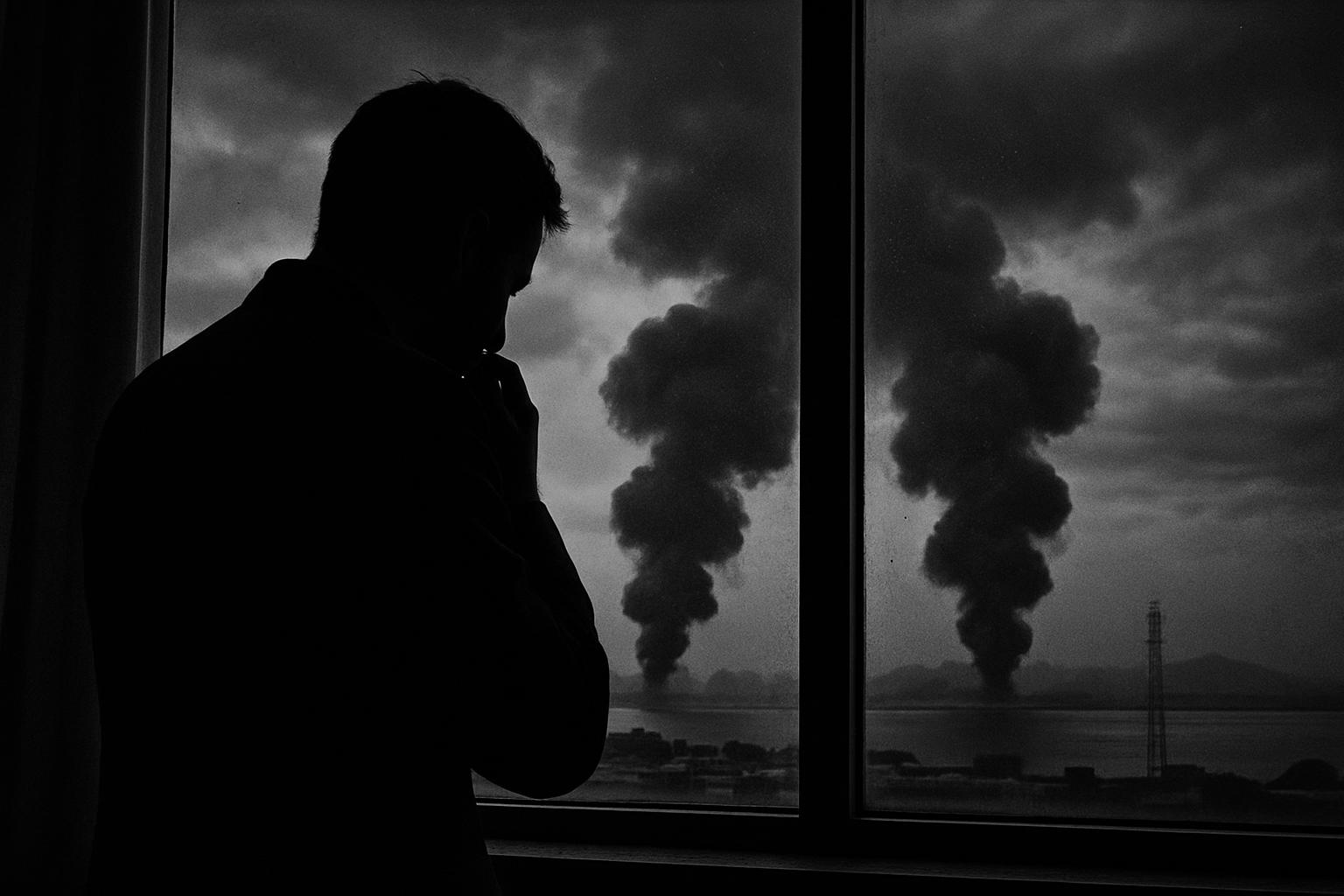
Washington says the pressure will continue “until I say enough,” while Iranian outlets report blasts from southern cities to islands by the Strait of Hormuz, testing how much ambiguity the White House and its partners can carry at once.
 Adrian ValeWorld Correspondent
US President Donald Trump has said that attacks on Iran “will continue until I say enough,” with potential targets including power plants and bridges, according to Al Jazeera’s live updates on July 15, 2026. Iranian media, cited in the same coverage, has reported explosions across southern cities and on islands off Iran’s coast, including in the Strait of Hormuz. The Islamic Revolutionary Guard Corps (IRGC), Al Jazeera notes, has said it attacked US forces in Kuwait, Bahrain, and Jordan. None of these battlefield claims is independently verified in that reporting, and the liveblog does not state casualty figures or enumerate specific sites hit beyond the president’s mention of categories of infrastructure.
This is an escalation story with two dials: control and alliance management. The first is how Washington frames aims and limits. The second is how regional actors hear those signals and move in response. The gap between the two, as reflected in the live updates, is where ambiguity accumulates.
What Washington Says It Is Doing
The clearest public line is the president’s: operations will continue at his discretion, with infrastructure among possible targets. That phrasing projects resolve while withholding a timetable or conditions for ending strikes. It also leaves open the scope question, since “power plants and bridges” sit at the edge of what observers might consider escalatory if pursued, a point the liveblog records without offering further US elaboration.
“Strikes on Iran will continue until I say enough,” Trump said, listing possible targets that include power plants and bridges.
Operational detail from the US side is sparse in the cited reporting. There is no official US tally of effects, and no declared shift to a broader war aim in the liveblog’s account. The message, as captured there, is pressure without a publicly defined ceiling.
What Regional Actors Say They See
On the other side of the line are reports pushed by Iranian outlets and statements attributed to the IRGC. Al Jazeera relays that Iranian media has reported explosions in southern cities and on offshore islands, including locations in the Strait of Hormuz. It also notes the IRGC’s claim that it struck US forces in Kuwait, Bahrain, and Jordan. The liveblog does not independently verify these claims, and it does not specify which facilities or units were involved.
The geography in those claims matters. Southern Iranian cities and islands off the coast place the action near critical maritime approaches. References to Kuwait, Bahrain, and Jordan situate US forces—again, per IRGC claims reported by Al Jazeera—among partners who host US military presence. Even without confirmation, the claim set underscores the regional audience for US signaling and the multiple capitals that will parse risk from the same set of public remarks.
Ambiguity as Method—and Liability
Strategic ambiguity can dampen tit-for-tat by denying adversaries a fixed threshold to game. The president’s open-ended line, quoted in the liveblog, stays within that zone. It is equally true that ambiguity can be read as license by actors who want to test boundaries, especially when reports of blasts and counter-claims multiply without outside verification. The liveblog’s caution on verification is part of this dynamic. Facts lag. Interpretations run ahead.
In this phase, escalation control is as much about what is not said as what is. The cited coverage records no enumerated red lines, no public metrics of success, and no stated off-ramps. That gap may be intentional. It also places more weight on how allies and adversaries infer intent from target categories and tempo.
The Guardrails—Seen Through Today’s Reporting
The institutional guardrails around US use of force, alliance logistics, and market signaling are not detailed in the liveblog. But they are present in the way the story is being told.
-
Domestic constraints: The reporting does not describe legislative steps or timelines. The absence matters because it leaves the president’s “until I say enough” as the only articulated horizon in public, at least in the account Al Jazeera provides.
-
Allied basing politics: The IRGC’s unverified claim—relayed by Al Jazeera—that it attacked US forces in Kuwait, Bahrain, and Jordan places host governments close to the operational map. The liveblog does not report their official positions. Their silence, in this snapshot, is a data point of its own.
-
Energy-market signaling: Iranian media reports of explosions on islands including in the Strait of Hormuz, as carried by Al Jazeera, keep attention on a chokepoint that draws immediate scrutiny in any Gulf crisis. The coverage does not venture into price forecasts or trade disruptions, and neither should readers absent firmer public data.
Each of these areas is a filter. Even where facts are thin, the categories shape expectations. The lack of confirmed site details or casualty figures in the liveblog means that arguments about proportionality and intent will hinge on rhetoric and geography until more is known.
What to Watch Next
- Whether US officials add specificity to aims or limits beyond the president’s line quoted here.
- Any corroborated reporting on locations struck in Iran or on the IRGC’s claimed attacks in Kuwait, Bahrain, and Jordan.
- Public statements from regional governments named in claims relayed by Al Jazeera.
- Clearer accounts of activity around the Strait of Hormuz, where the liveblog cites Iranian media reports of explosions on islands.
Until then, the test is not only whether Washington can calibrate strikes, but whether it can manage how calibration is perceived. The live updates capture two narratives running in parallel: a US statement of open-ended pressure, and Iranian reports that place the fight across sensitive terrain. Between them lies the space where escalation is either contained—or misread.