Assurances And A Timetable: How The Centre Found An Off Ramp To End Wangchuk’s Fast
Assurances And A Timetable: How The Centre Found An Off Ramp To End Wangchuk’s Fast
Late on 2026-07-23, ministers read assurances in a hospital room and the Prime Minister set a Cabinet timetable for an anti paper leak bill, giving the Centre a procedural exit that let Sonam Wangchuk end a 26-day fast without a signed deal as protests vowed to continue.
 Veera NairTET TV Anchor — India Desk
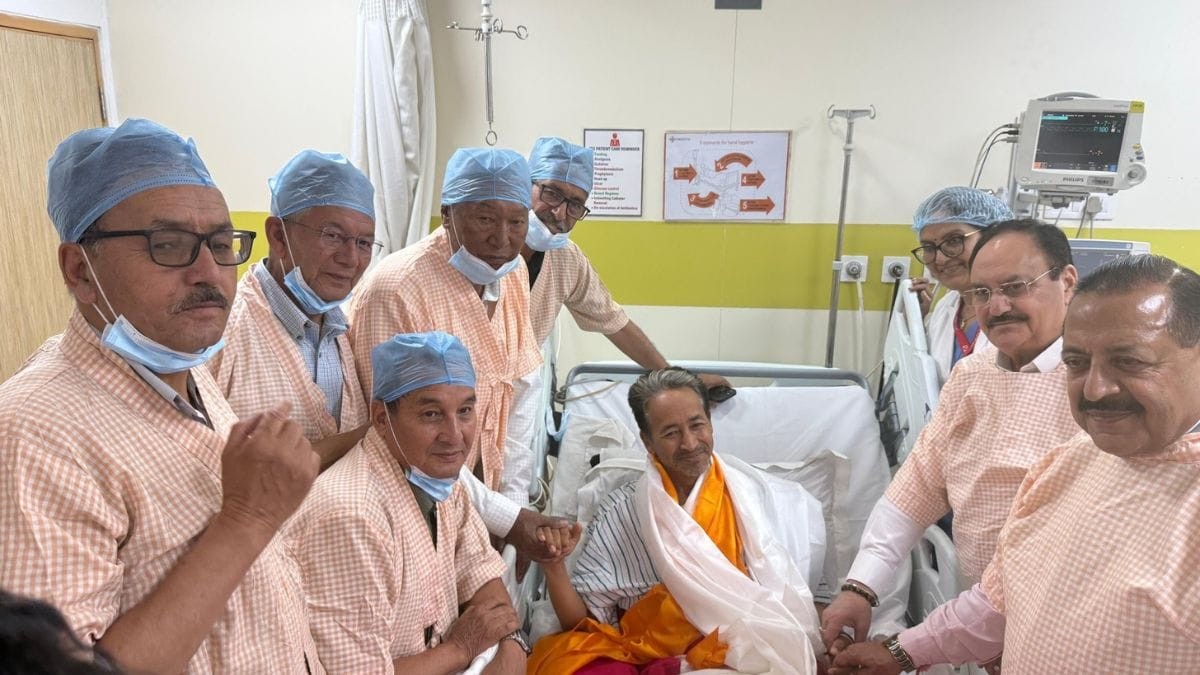
The end of Sonam Wangchuk’s 26-day fast on 2026-07-23 arrived with process, not a grand bargain. After weeks of backchannel and public pressure, Union ministers JP Nadda and Jitendra Singh reached Gurugram’s Medanta hospital late at night and read out assurances on camera. Soon after, Prime Minister Narendra Modi posted a video setting a near term timetable for a draft anti paper leak law to reach the Union Cabinet on Friday. Together, the two moves created a procedural off ramp for the government and gave Wangchuk a clear reason to prioritise health without abandoning the protest’s core demands.
What changed on the night
Two strands converged. First, the ministers recorded the assurances in Wangchuk’s hospital room. As aired in videos and reported by NDTV, they said the government was positive on not registering cases against those who protested peacefully at Jantar Mantar and those who joined the Parliament march referenced for 2026-07-20. They added that there would be a detailed discussion in Parliament on paper leaks and broader exam reforms, and that compensation for families of students who died by suicide after the leak would be positively considered. These are assurances, not policy. No circular, notification or enforcement mechanism has been announced yet, which means codification or administrative follow up will decide their reach. NDTV.
Second, the Prime Minister put a date on the next step for a draft law. In his late night video on 2026-07-23, he said a bill to provide tougher punishment for paper leaks, and to enable fast-track courts, would be placed before the Union Cabinet on Friday. He called leaks a matter of immense distress and framed the draft as the government’s immediate response that could move into Parliament after Cabinet clearance. The statement was about process and timing, not content, and passage is not guaranteed. The Print.
A promise to avoid cases on peaceful protesters, plus a near term Cabinet slot for a leak bill, created a procedural exit without a signed pact.
Why this was enough for Wangchuk
Wangchuk began fasting on 2026-06-28 at Jantar Mantar alongside CJP led student protests over exam paper leaks and education reforms. He framed the sit-in as peaceful and reform focused, then was shifted by authorities to Safdarjung hospital before moving to Medanta by court direction. By 2026-07-23, reports said he had lost about 11 kg. That night he said he was ending the fast after long negotiations on conditions and in view of possible violence, and he urged absolute nonviolence by supporters. He cited the presence of Nadda and Singh and said he would detail the conditions in a video. NDTV, Indian Express.
The logic is direct. The ministers’ reading built a public record of intent on three pressure points, especially protection for peaceful demonstrators. The Prime Minister’s timetable showed that the policy pipeline had a defined, near term step. Together, they created movement that was visible, repeatable and testable, without forcing Wangchuk to declare victory or the government to concede fault.
Necessary, not sufficient
Each assurance now depends on follow through. The line on no cases against peaceful protesters is an assurance as of 2026-07-23, not an implemented policy. There is no published circular or legal instruction in the public domain yet detailing scope, authority or redress, and oversight of protest incidents remains an open question. The Parliament discussion pledge is a commitment to take up the issue, not a verdict on accountability, and modalities are not specified. The compensation line is a promise to consider, which still requires criteria and process. NDTV, The Print.
The anti leak bill also sits in process. As of 2026-07-23 it exists as a draft that the Prime Minister said would go to Cabinet on Friday. The stated elements are stricter punishment and fast-track courts. Beyond that, the contents are not public, and passage next week is not a given. A Cabinet slot and a parliamentary path are procedural, which makes them measurable, yet they do not predetermine outcomes. The Print.
Politics will test the off ramp
The protest did not switch off with the IV drip. On 2026-07-23, CJP founder Abhijeet Dipke welcomed Wangchuk’s decision but said the Jantar Mantar protest would continue until Education Minister Dharmendra Pradhan resigns. That demand remains live, and there is no indication it will be met. The Centre’s assurances included a detailed Parliament discussion, not a personnel decision, and any consideration of a resignation was described in media accounts as part of accountability debates, not a concession. The Print, Indian Express.
The state also signalled movement inside the bureaucracy on 2026-07-23. The Appointments Committee of the Cabinet named Naresh Pal Gangwar Higher Education Secretary, replacing Vineet Joshi. This is an appointment amid the leak row, not proven cause and effect. It does show a willingness to recalibrate the administrative team that will handle the exam reform docket in the weeks ahead. The Print.
The road ahead
Three tests will decide whether the procedural exit becomes a policy settlement. First, whether the no cases assurance is formalised with clear scope and grievance pathways. Second, whether the Parliament discussion on leaks and reforms is substantive, time bound and outcome linked. Third, whether the anti leak draft reaches Cabinet on schedule, and whether lawmakers can debate the bill’s architecture in public view. Until then, the Centre has bought time, not closure. Wangchuk has stopped fasting, not caring. And the CJP has kept its tents up at Jantar Mantar, not as a threat, but as leverage that will rise or fall with delivery.
For now, the mechanism matters. The government used process to create an exit without proclaiming defeat. The activist used process to protect his health without walking away from principle. The rest belongs to Parliament, police orders and the text of a bill that is still a promise on paper. NDTV, The Print, Indian Express.